The College of Europe was the world’s first institute of postgraduate studies and training in European affairs.
It was founded in 1949 following a decision of the Hague Congress of 1948, widely regarded as a founding moment of modern European integration. The initiative was championed by leading European figures such as Salvador de Madariaga, Winston Churchill, Paul-Henri Spaak and Alcide De Gasperi, who envisioned an institution where university graduates from across Europe could study and live together in preparation for careers dedicated to European cooperation and integration.
The first truly European educational institution
When the College opened its doors, only four years had passed since the end of the Second World War, making the idea of young Europeans from countries recently divided by conflict living and learning together a bold and visionary experiment. Yet the experiment succeeded: the College became the first truly European educational institution of the post-war era, fostering dialogue, mutual understanding and peaceful cooperation while preparing generations of students to contribute to the construction of a more united Europe.
From Bruges to Natolin, Warsaw
A group of Bruges citizens led by the Reverend Karel Verleye played a decisive role in bringing the College of Europe to Bruges, recognising both the symbolic and practical value of establishing a European institution in the historic Flemish city.
Professor Hendrik Brugmans, one of the leading intellectual figures of the European Movement, was appointed as the College’s first Rector. During his long tenure (1950-1972), the College of Europe had been largely shaped as an institution.
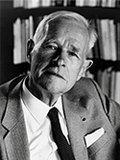 Hendrik Brugmans | 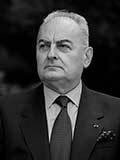 Jerzy Łukaszewski |
It was perhaps no coincidence, however, that the College in Bruges was next entrusted to Jerzy Łukaszewski, a Pole whose motherland was then still locked behind the Iron Curtain. Łukaszewski devoted 30 years of his life to the College and served as Rector for 18 years (1972-1990). From the first year of his rectorship, Jerzy Łukaszewski introduced groundbreaking reforms that continue to shape the College of Europe today. His ideal had been to realise the original vision of the College of Europe defined in 1948: to underline the necessity of European unity.
This could only be achieved after the momentous changes that began in 1989, which brought the collapse of the Soviet Union, the end of the Cold War, and the fall of communism in Central and Eastern Europe. For this reason, Jerzy Łukaszewski is rightly regarded as one of the founding fathers behind the establishment of the sister campus of the College of Europe in Poland, a place that has been highly symbolic of the fate of the vicissitudes of the continent, not only in the 20th century.
By establishing a presence in Central Europe, the College anticipated the enlargement of the European Community, focusing on the reintegration of a Europe unnaturally divided.
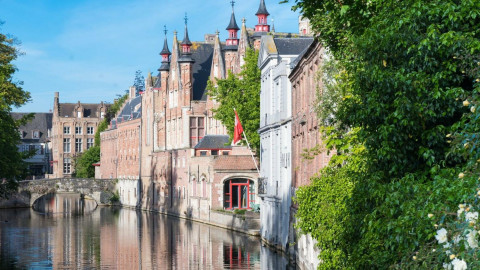 Bruges | 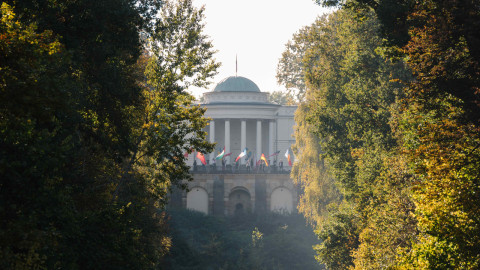 Natolin, Warsaw |
Deepening expertise on Southeastern Europe in Tirana
Reflecting the College’s longstanding commitment to fostering European integration through education, in 2024 a new campus was opened in Tirana, Albania, specialising in Southeastern Europe.